Where do you see the hurdles in the start-up process? Where did you seek support?
There are a few hurdles and challenges in a start-up process; and not all of them are foreseeable. One challenge for us is certainly product development. Usually, investment founders have one or two dipping basins in which the wax models are dipped into the ceramic suspension. If a changeover is made to our solution, our customers must be able to rely on us 100%. This applies to both the quality and the quantity of the ceramic suspension. We have to and want to meet the high demands of investment casters in order to be a reliable partner in the future.
Investment casting is one of the oldest casting processes in the world – the processes are correspondingly established in the industry. As a young start-up with a new idea, we therefore encounter a relatively conservative industry, which makes market entry particularly exciting. A central task in communication is therefore to create acceptance and trust in our technology and in us as people. We try to achieve this through a fresh appearance, coupled with a great understanding of the challenges and processes in the investment casting industry, as well as through early testing of the product by the investment casting companies already during product development.
We receive support from numerous sides. One should mention the exchange with experts from the industry as well as potential customers. They provide valuable feedback and also openly address what they see as critical points. It is also important to talk to other start-ups that are in a similar phase or know them from the past. The KIT’s Gründerschmiede also offers advice and support.
Basically, it’s good to keep your ears and eyes open, and to take in and evaluate input and feedback from conversations without bias.
What was one of your biggest challenges during the founding phase?
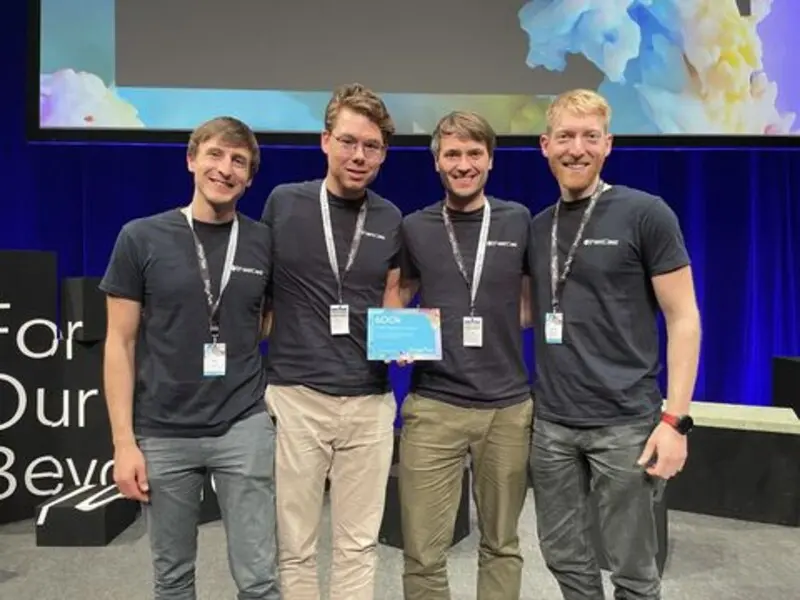
Here, too, the challenges are manifold. However, communication plays a central role. The team has to get to know each other, understand what makes each individual tick and what ideas each team member has. What is the motivation of each individual to found a company? What aspects of the company to be founded are important to each individual? What does each member expect from himself and from the others in the future? What vision does each individual have for FastCast? How do we as a team manage to develop a vision with which everyone identifies and for which we are all burning?
It is important to treat each other with respect and trust so that open and unbiased communication is possible. It is important that every member can (and should) express his or her opinions and views openly. All these are central building blocks for such an exchange to succeed. After all, a shared vision also helps to overcome other challenges.