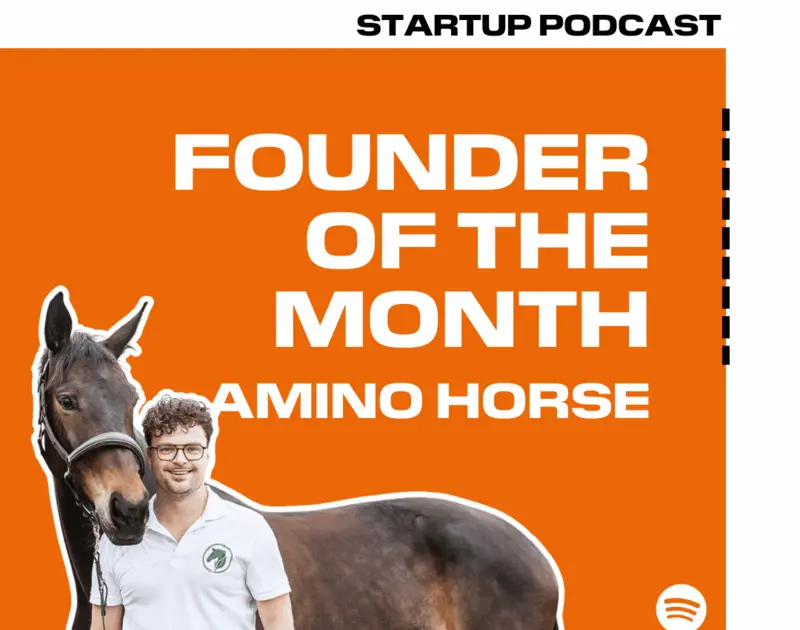
Founder of the month: Amino Horse

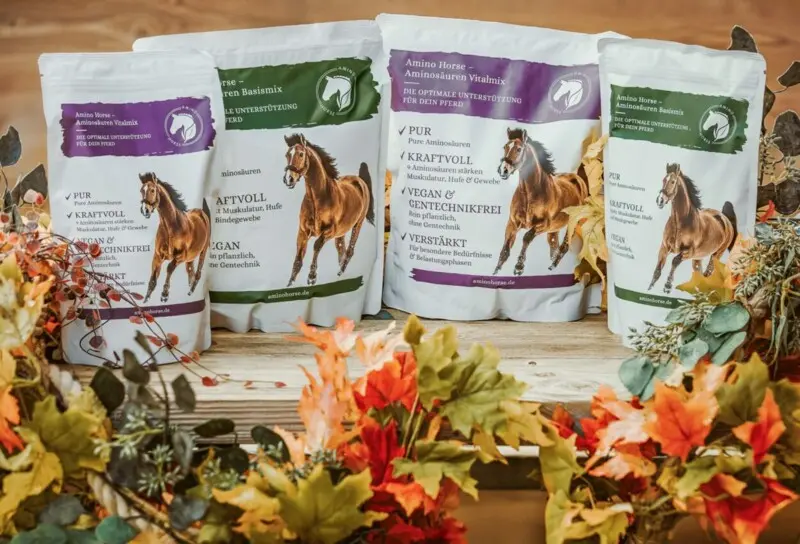
Has anything changed for you since the formal founding?
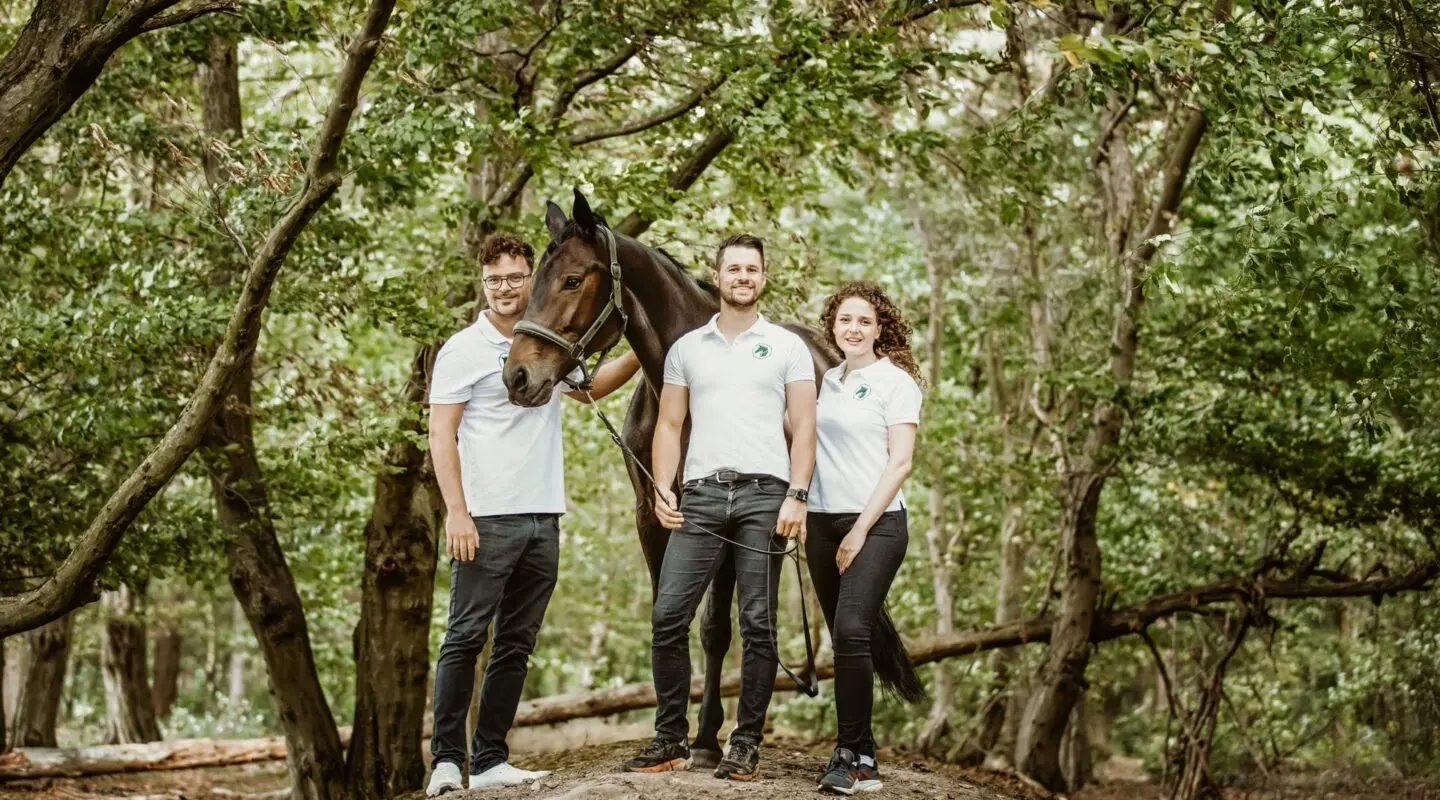
Absolutely: Founding a company is always a big part of your own life story. A lot has changed since Amino Horse was founded, both professionally and privately. A start-up is naturally very volatile: there is a lot of movement, new opportunities arise, new challenges emerge, and all of that also affects us as the people behind it. I have taken on many new roles during this time: from self-employed to entrepreneur, from solopreneur to team, from a very small company to something bigger. We are breaking new ground, constantly meeting new people, and developing both personally and professionally. Change has become something of a constant for us, and I believe that is exactly what a company needs if it wants to stay alive and grow.
How did you solve the problem of (follow-up) financing?
We finance Amino Horse entirely from our own cash flow. This means that we develop our products close to our customers, sell them directly on the market, and consistently reinvest the revenues generated in growth. As a result, we are currently not dependent on financing rounds or external investors. In the future, fresh capital may of course be an option to scale even faster. But at the moment, our priority is to get our Amino Horse baby off to a solid start.
Are current global crises affecting your startup?
Yes, global crises are not leaving us unscathed. We are noticing changes in the supply chain in particular: delivery times have become longer and, in some cases, less reliable, especially for goods traded on the global market. In addition, there are indirect effects via energy prices, for example in the case of cardboard packaging, the cost of which has multiplied in some cases in recent years. This forces us to be even more forward-looking in our purchasing, planning, and warehousing so that we can continue to offer our products in a stable manner and in the high quality we are known for.
What are your next big milestones in the coming 12 months?
On the one hand, we are intensively engaged in product development and will be launching further new, innovative products that are even more specifically tailored to the different needs of horses, from sport stars to seniors in open stables. On the other hand, we want to expand internationally and tap into new markets outside Germany. At the same time, one goal remains constant: healthy, sustainable growth so that even more horses can benefit from an optimal supply of amino acids.
In your opinion, what qualities should a founder have?
From our point of view, curiosity is one of the most important qualities. Anyone who starts a business should enjoy learning new things, embracing changing situations, and seeing change not as a disruption but as the norm, because in a start-up, there is always movement.
Equally important is passion for your own subject. I grew up with horses, and a large part of my life takes place in the stable, so starting a business in the equine sector is not just a business for me, but also an expression of my hobby. I am, so to speak, Amino Horse’s first customer. This helps enormously in understanding the needs of the target group and finding the right approach. That’s why we recommend starting a business in a field that really fascinates you and that you are passionate about.
It also takes openness and courage: to simply try things out, break new ground, and be able to live with uncertainty. And especially in a team, it’s important to understand your own strengths, values, and motivations, and what qualities others can bring to complement them. Innovation arises when different perspectives come together. Being aware of this and consciously putting together diverse teams is, in our view, a real skill for founders.
Do you have any practical tips for other young entrepreneurs?
One of our most important tips: Talk about your start-up at every opportunity. Talk about your idea, your product, your challenges. Get feedback. Often, the most exciting contacts, collaborations, or leads come from places you would never have expected. Just as important: stay open. Open to other opinions, open to criticism, open to developing your own idea further. Try not to judge too quickly or get too stuck in your own patterns of thinking.
And then: take it step by step. There’s this image: how do you eat an elephant? Piece by piece. It’s the same with starting a business. No one has to build a business in a day. But if you set out to improve by just half a percent every day, to optimize yourself or your product minimally, then over the course of a year, that adds up to a lot. We want to pass on this mindset of small, continuous improvements instead of the perfect big breakthrough to young founders. That way, you’ll remain capable of action, motivated, and on the right track.
From today’s perspective, what would you do differently?
Of course, hindsight is always 20/20, but many “mistakes” were probably necessary to learn the lessons that have shaped us today. If we had to highlight one thing, it would be this: we would delegate tasks earlier and focus even more consistently on our core tasks in the startup. For a very long time, we did an enormous amount in-house. Today, we are much more conscious of which areas we can outsource or hand over to team members and employees.
Next time, we would consider this process of handover and division of labor from the outset: setting up structures in such a way that things can be handed over, transformed, or transferred to other systems more easily. In short: let go earlier in order to grow faster.