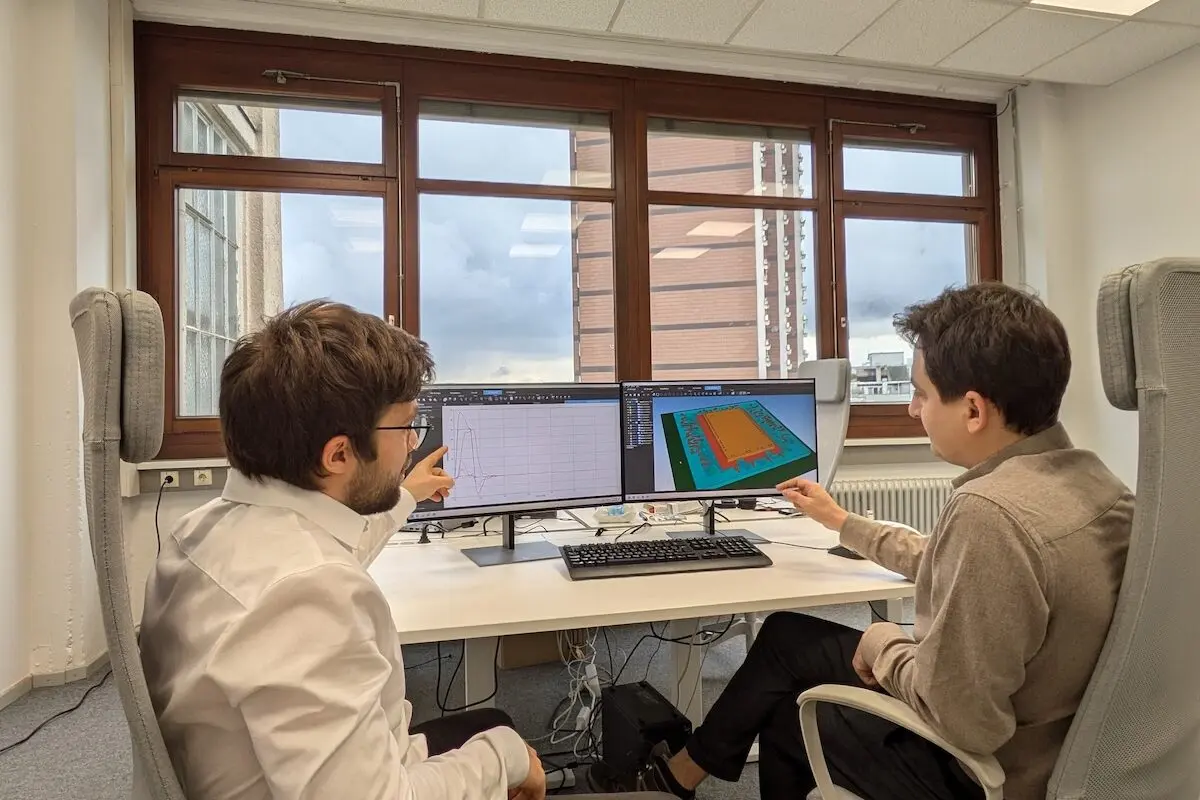
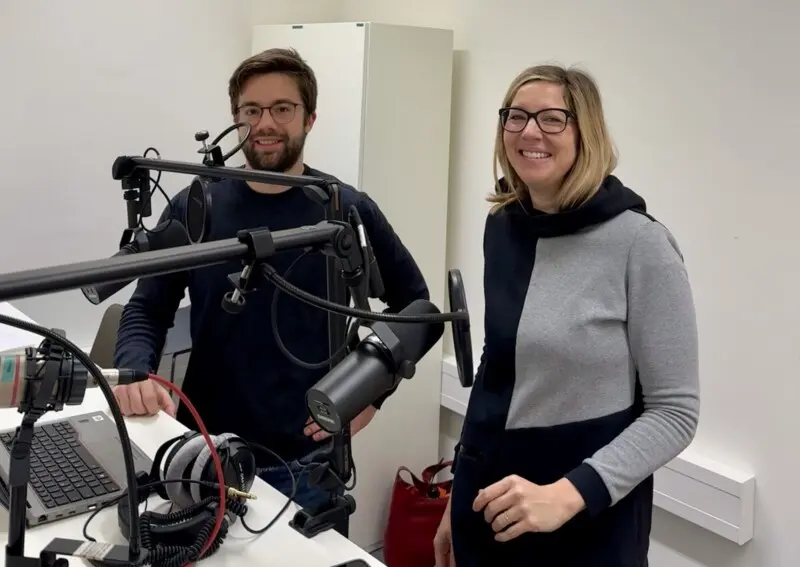
In an interview with milli IC
We talked to Alexander from the milli IC team about their journey from the initial idea to market entry, hurdles, challenges and successes. Want to know more? Listen to the podcast episode on Spotify or Apple Podcast.
What does your company stand for?
milli IC develops high-performance radio-frequency circuits in the field of millimeter wave technology. Through our proximity to current research, we want to stand above all for transferring the latest and most innovative solutions into commercial products. This is done either in-house or as a development service provider for third parties.
Where and how did you get the idea to found a company?
Ersufi from the founding team had been toying with the idea of founding his own spin-off for a long time. In addition, a design method for high-frequency power amplifiers that was suitable for patenting and commercialisation was developed at the KIT around 2022. In 2023, industrial demand from VEGA Grieshaber KG arose in discussions with Prof. Ulusoy. At first, the processes ran in parallel and independently of each other and were brought together by Prof. Ulusoy. The combination finally provided the impetus for the foundation at the end of 2023.
How did the founding team come together?
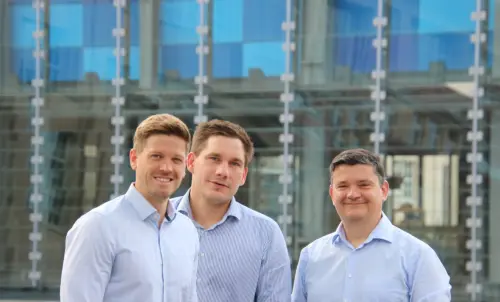
The founding team emerged from the academic environment of the KIT. Esref Türkmen pursued his industrial doctorate at the KIT. This is how he came into contact with the other founders of the KIT. Prof. Ahmet Cagri Ulusoy, professor at the Institute for High-Frequency Technology and Electronics, and Alexander Haag, former research associate at the KIT. It was important to us not to be a purely academic spin-off, which is why Esref’s many years of industry experience were a great addition to the KIT team. VEGA Grieshaber KG, a global leader in innovative level and pressure measurement technology, came on board as an industrial co-partner and supporter. Even before the founding process, there were personal contacts between KIT and VEGA and the company’s need for chip design was known. So the collaboration was the logical consequence.
Where did you see significant hurdles in the founding process?
On the one hand, we saw a bureaucratic aspect that we engineers had not dealt with much in our previous technology-oriented careers. On the other hand, there are financial hurdles. Since we started with a private investor, acquiring an initial investment was a challenge for us, but it was relatively easy to solve. In addition, we were able to fall back on private support for some of the bureaucratic aspects. In the long term, however, chip design requires very high investments, which are difficult to justify in a start-up.